 Boarding
 Daycare
 Grooming
 Training
 Dog Park / Dog Bar
 Enterprise

The global pet-care market is poised to grow at a compound annual growth rate (CAGR) of 5.1% between 2022 and 2030. Additionally, pet ownership has increased by 12% in the last 30 years.
The industry is ripe with opportunities for businesses like yours, but having the right strategies in place to engage your audience will keep your brand top of mind and unique from competitors. Pet marketing basics will give you a strong foundation for your strategies, so let’s dig into a few strategies you can implement for a strong start to the year.

Pet Business Marketing FAQs
What are the benefits of pet-care marketing?
Marketing plays a crucial role in the success of any pet-care business, allowing you to effectively promote your brand, build awareness, and ultimately drive revenue.
Done right, marketing your pet business offers the following benefits:
- Guiding communications. Your messaging must maintain a consistent voice, tone, and brand, regardless of the communication channels you use. For the best results, implement the same strategies across all communications. Creating a marketing plan for each campaign will guide your messaging and unify communications.
- Strengthening your brand. Get your brand and its messages in front of more eyes. When you use compelling visuals and messaging, you’ll catch your audience’s attention and stick in their minds.
- Attracting new clients and audiences. Expand beyond your current customer base by targeting adjacent markets with your messaging. For example, a grooming business might target cat parents by promoting the benefits of cat grooming services.
- Engaging current customers. Ensure current customers know your business constantly seeks ways to innovate and improve. Promote any new products, services, promotions, or initiatives you roll out to ramp up awareness and participation.
As we touched on earlier, marketing also differentiates your services from competing businesses. You must convey why pet parents should trust you with their furry family members over the other businesses in town. It may be because of how you train your staff, the enriching activities you offer, or your clean and spacious facilities. Whatever the reason, identify and communicate those unique qualities.
How can pet businesses measure marketing success?
Measuring the success of your marketing efforts is essential for optimizing strategies and ensuring a solid return on investment (ROI). Track relevant key performance indicators (KPIs) such as website traffic, conversion rates, social media engagement, and customer feedback. Analyzing the following metrics provides insight into what’s working and what needs adjustment:
- Website analytics: Use tools like Google Analytics to monitor traffic sources, user behavior, and conversion rates.
- Social media metrics: Track likes, shares, comments, and follower growth to gauge engagement levels.
- Customer feedback: Regularly collect feedback through surveys or direct communication to understand client satisfaction and areas for improvement.
- ROI calculations: Assess your marketing spending against generated revenue to determine the profitability of your campaigns.
Streamline Marketing & Data Analysis with Gingr
As your pet-care business builds a marketing plan, consider using software like Gingr to simplify the process.
Our comprehensive suite of tools, including SMS campaigns and marketing email templates, enables businesses to engage clients effectively and drive retention through personalized communication. With Gingr's analytics and reporting features, you can track customer behavior, monitor campaign performance, and gain insights into booking trends.
How much should your pet business budget for marketing?
While there is no one-size-fits-all answer here, there are some general budgeting guidelines you can follow.
First, you’ll need to determine how much you can budget for marketing overall. Business-to-consumer (B2C) companies, like most pet-care businesses, typically spend more on marketing than business-to-business (B2B) companies. HubSpot found that B2C companies spent an average of 9% to 12% of their revenue on marketing activities.
Next, determine how you will allocate these funds to individual channels or campaigns. Pay attention to your business’s slow and peak seasons to effectively time campaigns, and invest more in channels your customers already use. To help you kickstart these efforts, we’ve put together a helpful marketing budget calculator:
How should pet businesses time their marketing campaigns?
Again, this will vary depending on your customers’ unique needs and purchase behaviors. For instance, a dog boarding business might be busiest in the summer months when everyone is traveling, while a pet retail shop could see the typical holiday boost in sales as people shop for gifts.
Here are some good rules of thumb that can help you start filling in your marketing calendar:
- Start “pre-season” campaigns about four to six weeks before your predicted peak season to start securing bookings.
- Plan a few promotions or sales during slow seasons to encourage purchases or bookings.
- Time new launches or package deals around payday (the 1st and 15th of the month) when customers have disposable income—but promote them a few days before to build awareness.
- Market around school calendars (e.g., spring break, summer vacation) when families are likely to be traveling.
- Launch emails during the week, ideally mid- to late morning, and avoid sending them on weekends when people are less likely to check their inboxes.
10 Effective Pet-Care Marketing Strategies
1. Build a unique brand.
A brand is more than just your business’s name and logo. It should convey your business’s core identity, values, and personality to your customers. It shapes your business into an entity customers can feel and know. As Walter Landor, a pioneer of branding and design, once said, “Products are made in the factory, but brands are created in the mind.”
For your pet business, this means developing a consistent persona that you speak through whenever you communicate with your customers. Develop a guide describing your brand’s tone and voice. Are you funny or serious? Formal and knowledgeable, or friendly and approachable? Documenting these details will keep your communications consistent.
Keep these other quick tips in mind when creating your brand:
- Claim a niche. Rather than trying to be everything to every dog, focus on what you excel at. For example, are you "the quiet oasis for senior dogs" or "the rugged outdoor adventure camp?” A specific brand is much more memorable.
- Audit the in-person experience. Think about whether your facility supports the brand you want to cultivate. Pay attention to sensory details like sight, sound, and smell. What does your lobby smell like? What music is playing? If your goal is to convey a sense of luxury and relaxation, for example, you might choose light, clean scents and calming music.
- Enforce visual consistency. Pick two to three primary brand colors and one or two fonts, and use only these visual elements in your communications. Your Instagram graphics, physical flyers, staff uniforms, and website buttons should all perfectly match.
- Consider a brand mascot. Use a specific, recurring pet (often the business owner's dog or a beloved regular) as the "face" of your social media. It builds a parasocial relationship and gives your brand a literal face. For example, the founder of Wonder Bark was inspired by her dog Abbey to create the brand’s all-natural treats, and she featured Abbey on the packaging.
Remember, strong brands are developed over time. The best brands have existed and evolved for years. Coca-Cola was invented in 1886, meaning the company has been shaping its brand for nearly 150 years.
2. Spark two-way interactions on social media.
Social media allows all kinds of businesses to connect with their customers, increase visibility, and foster engagement. Platforms like Instagram, Facebook, and TikTok provide a space where businesses can showcase their services, build relationships, and grow their customer bases.
Create content that sparks interactions by using strategies like:
- Polls and surveys: Use polls to gather opinions about services or simply engage pet parents with fun questions about their pets.
- Contests and giveaways: Host contests where pet parents can submit photos of their pets to win free services or products.
- Quizzes: Create pet-related quizzes that are fun and educational, driving both entertainment and awareness of your services.
- Live Q&A sessions: Host live streams where pet parents can ask questions about pet care, training, or grooming.
- User-generated content: Encourage your followers to post their own content with fun prompts or challenges. Create a unique hashtag or have them tag your account to track responses. For example, on National Puppy Day, have them post their favorite pictures and videos of their dogs as puppies.
3. Reach customers directly through email and SMS.
Email marketing is one of the most effective ways for pet-care businesses to nurture customer relationships and keep their audiences engaged. You can communicate directly with pet parents, delivering tailored promotions, updates, and valuable tips right to their inboxes.
Personalization is key in email marketing. Targeted campaigns segment your audience and send tailored messages to pet parents based on their specific needs and preferences. For example, clients with senior dogs might appreciate tips on specialized care or exclusive promotions on senior dog services.

4. Tap into local audiences with SEO.
Search engine optimization (SEO) is a vital marketing tactic that helps pet-care businesses improve their online visibility and attract more clients through search engines like Google. By optimizing your website and content, you can rank higher in search results when pet parents are looking for services like dog daycare, grooming, or boarding.
Here are some essential SEO tactics to consider for boosting your search rankings:
- Create high-quality content: Regularly publish blog posts, videos, and other content that addresses common questions or concerns pet parents might have.
- Build backlinks: Establish backlinks from reputable websites in the pet-care industry, which signal to search engines that your site is authoritative and trustworthy.
- Improve site speed: Ensure your website loads quickly and provides a smooth user experience, as search engines consider site speed when ranking pages.
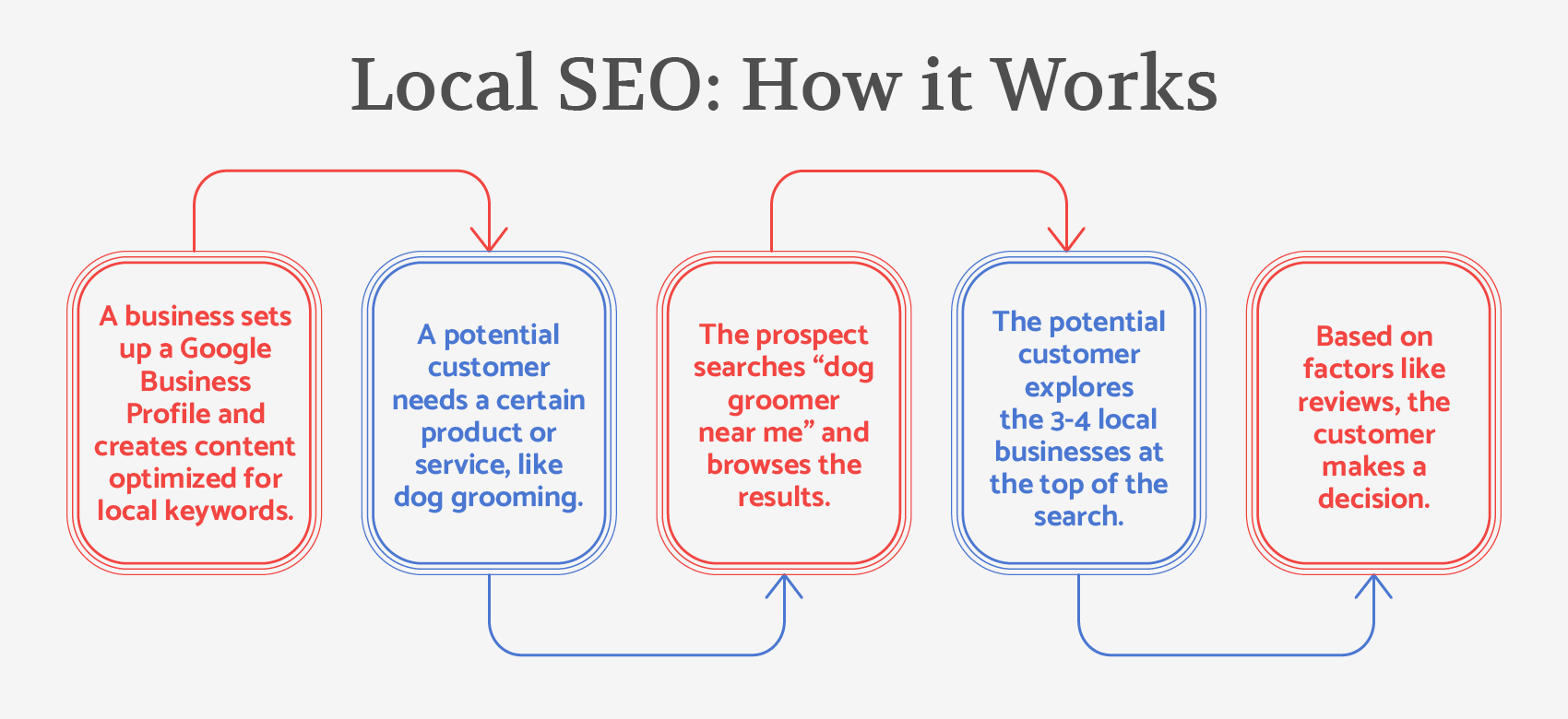
Focusing on local SEO is particularly important for pet-care businesses, as many of your clients are searching for services nearby. Use location-specific keywords and create a Google Business Profile for your business to increase visibility in local searches.
Then, when a potential customer searches keywords related to your business, they’ll see your business in the local results, browse your services and reviews, and make a decision about where to go.
5. Build thought leadership using content marketing.
Content marketing is a valuable strategy for pet-care businesses to engage and educate their audiences while promoting services organically. A diverse content strategy should include written articles, videos, and visual content tailored to your target audience’s interests.
Use these content marketing tactics to grow your pet-care business:
- Blogging: Write blog posts that answer pet parents’ common questions or offer tips on dog training, grooming, or pet behavior.
- Video content: Create videos that showcase your services, highlight customer testimonials, or share educational content, like how-to guides on pet care.
- Infographics: Develop visually engaging infographics that provide bite-sized tips or data-driven insights about pet care, which are easy to share across platforms.
- Social media stories: Use short, engaging stories on Instagram or Facebook to share day-in-the-life moments of pets at your facility or quick educational tips.
6. Deepen relationships with promotions and loyalty programs.
Promotions and loyalty programs encourage repeat business and foster long-term relationships with pet parents. Offering creative promotions, such as discounts for first-time clients or seasonal service bundles, can attract new customers while giving your existing clientele a reason to return.
Loyalty programs, on the other hand, provide a more sustained way to keep clients engaged. Rewarding repeat customers with free services or discounts after a set number of visits motivates them to stay loyal to your business. Pet-care businesses can also get creative with loyalty programs by offering tiered rewards based on how frequently customers use your services, creating a sense of exclusivity.
7. Find new audiences through influencers and partnerships.
Partnering with influencers and local businesses can significantly enhance your pet-care business's marketing strategy. Pet influencers, with their engaged followers, offer a unique way to promote your services in a more personal and trustworthy manner. In addition to influencer partnerships, collaborating with local businesses offers excellent cross-promotion opportunities.
Here are some ideas for influencer and local partnership strategies:
- Influencer campaigns: Collaborate with pet influencers to feature your services on social media, blog posts, or videos. This tactic earns you their endorsement and gives you access to their followers.
- Cross-promotional offers: Partner with local pet supply stores or veterinarians to offer joint discounts or service bundles. You could even organize a cause marketing campaign to promote and benefit a local nonprofit or other charitable cause.
- Co-sponsored events: Host events like pet adoption days or grooming demonstrations in collaboration with a local business.
- Social media takeovers: Invite a local business or influencer to take over your social media for a day to share content and engage followers.
8. Enhance your online presence and website.
You need a responsive, mobile-friendly website that can serve as an online office for your business. Your website helps potential customers find your services amongst competitors in search engine results and is a valuable resource for existing customers to interface with your brand.
Just like having a visually appealing outdoor sign or storefront, having a well-designed website for your business makes you look professional to your customers. Additionally, a website is open 24 hours a day, seven days a week, meaning customers can browse resources, get their questions answered, and book services at any time.
Grow your online presence by posting useful blog content, maintaining social media profiles, and regularly engaging your audience. For example, a dog daycare might organize a monthly Q&A event. Or, start fun social media challenges with dedicated hashtags, like a dog costume contest. These initiatives allow you to engage directly with your audience, opening the door to two-way conversations.
9. Launch targeted paid ads.
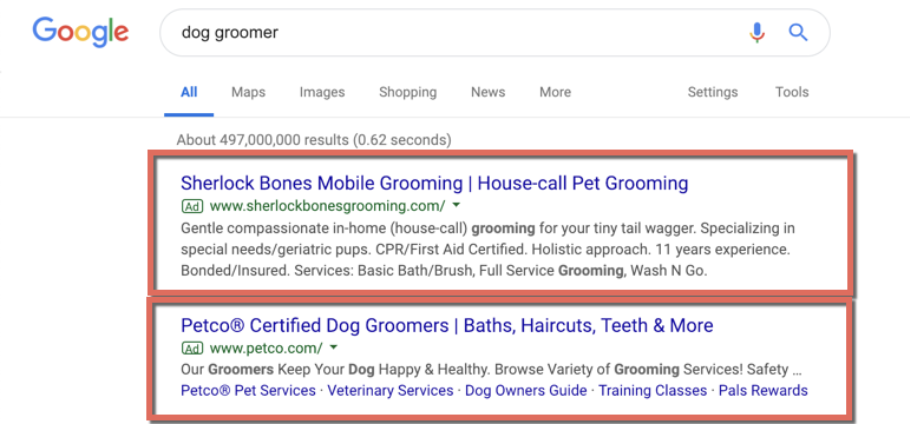
There are two ways to show up online. You can rank for relevant keywords organically by using SEO tactics or non-organically by paying for advertisements.
Keep in mind that investing time and energy into SEO will provide long-term benefits for your business and brand. Paid advertisements require you to keep paying to remain effective. But if you have room in your budget, paid advertising can be a great way to drive more leads.
Facebook Ads
Facebook is a popular place for animal lovers, so you can target your audience specifically with various types of Facebook ads, including video, image, or carousel ads that feature multiple images. Use these ads for branding or lead generation by adding a form directly into the ad. Different from Google Search Ads, Facebook Ads can target people based on age, income, and interests.
Google Ads
This is a great way to take advantage of the popularity of Google, which holds over 90% of the global search engine market. Google Ads pop up when someone searches a keyword the advertiser paid for. These ads are generated based on keywords and can be filtered to only show up for searchers who live near your location.
10. Analyze and encourage online reviews.
Getting feedback from your customers is a great way to get to know them better and ensure you meet their needs. Positive public reviews can enhance your reputation and encourage first-time customers to try out your business. But how do you go about getting reviews?
Consider these tactics:
- Simply ask for feedback. Print a request for feedback on a receipt or ask online after the checkout process using automated tools like Broadly. You may feel like asking is too forward, but seven out of 10 customers who are asked will write a review for your business.
- Get creative. Use your software’s survey features to follow up with customers automatically after they book your services or purchase a product. Broadly also helps you reach out via text and email, and makes it easy for your customers to write positive reviews and get them posted in the right places.
- Learn from others’ mistakes. Getting online reviews in the wrong ways can actually lead to penalties for your business. Avoid these consequences by never buying fake reviews, bribing customers, or spamming customers with repetitive or aggressive requests.
Note: Google and Yelp are getting better at catching fake or forced reviews, and they penalize companies by removing them from their platform. Potential customers often see through these reviews, decide the company isn’t trustworthy, and go to another business for pet-care needs.
Additional Resources
Crafting a marketing strategy can feel doggone stressful, but you don’t have to tackle it solo! Gingr offers a variety of tools and resources designed to simplify the process and help you achieve success. Book a demo and discover how Gingr can help you market your business quickly and easily.

Check out the links below for more resources on each topic we discussed:
Social Media
- The Power of Digital Marketing in Pet Care: Unlocking Success
- Pet-Care Business Social Media Marketing: A Crash Course
- Market Your Pet Business With Interactive Social Media Posts
- The Power of Social Media in 2024 for Pet-Care Businesses
Email Marketing
- Email Marketing Strategies for Pet-Care Businesses
- The Benefits of Email Marketing for Pet-Care Businesses
Search Engine Optimization
- The Impact of Local Search and SEO on Pet-Care Businesses
- How to Appear Higher on Search Results: SEO Tips for Pet-Care Businesses
Content Marketing
- Leverage the Power of Video Marketing for Your Pet-Care Business
- Fetching Success: Using Content Marketing to Engage Pet Owners
- How to Start a Pet-Care Blog + 5 Tips for Compelling Content
Promotions and Loyalty Programs
- 5 Brand Loyalty Program Ideas for Your Pet-Care Business
- How Loyalty Programs Can Boost Your Pet-Care Business
- 5 Creative Promotional Strategies for Your Pet Business
Influencers and Local Partnerships
- The Rise of Pet Influencers: Marketing Potential and Collaborations
- Collaborating with Local Businesses for Cross-Promotion in Pet Care
Business-Specific Marketing Resources
- Marketing Tactics for Dog Grooming Businesses
- Marketing Tactics for Dog Daycare Businesses
- Marketing Tactics for Dog Bar Businesses
- Marketing Tactics for Dog Training Businesses
Measuring Marketing Success

Subscribe to the Gingr Blog