 Boarding
 Daycare
 Grooming
 Training
 Dog Park / Dog Bar
 Enterprise

You know grooming and enrichment like the back of your hand. Caring for dogs is the best part of business and comes naturally. You might agree that although you're surrounded by kindred spirits who love giving attention to pets as much as you do, staffing is one of the toughest balancing acts in pet care.
Schedule too many team members, and labor costs eat into your margins. Schedule too few, and suddenly pets aren’t getting the attention they deserve, staff morale dips, and customer experience suffers.
If this sounds familiar, you’re not alone. Most pet-care businesses rely on gut instinct, outdated spreadsheets, or last-minute schedule changes to manage staffing. The good news? There’s a better way, and it starts with data.
Predictive staffing uses real operational data to help you plan smarter schedules, anticipate busy periods, and staff your facility with confidence. With digital reports and scheduling tools, you don’t have to guess anymore.
Let’s dig into how predictive staffing works and how the right tools can empower you to put it into practice.

What Is Predictive Analytics Staffing?
Predictive staffing is the practice of using historical data and real-time insights to forecast labor needs before problems arise.
Instead of reacting to chaos, you’re proactively answering questions like:
- How many staff members do I really need on Tuesdays?
- Which teams are stretched thin during peak hours?
- Where am I overspending on labor without realizing it?
- Which employees are consistently carrying the heaviest workloads?
For pet-care businesses, predictive staffing is especially powerful because demand fluctuates constantly—by season, by day of the week, even by time of day. Boarding spikes around holidays. Daycare surges midweek. Grooming ebbs and flows.
When you use data to guide staffing decisions, you create a win for everyone:
- Pets get consistent, attentive care
- Staff feel supported instead of overwhelmed
- Your business runs leaner and more profitably
By making data-driven decisions, you improve operational efficiency and enable better patient care, ensuring that both staff and animals benefit from a more organized and responsive environment.
Why Guesswork Leads to Over- and Understaffing
Without clear visibility into labor data, staffing decisions often rely on assumptions:
- “Mondays are usually slow.”
- “We’ll just add someone in case it gets busy.”
- “That team always needs more help.”
Pet businesses may struggle with inefficient scheduling and resource utilization, often relying on manual processes and administrative work for documentation, client follow-ups, and data management. These outdated methods can lead to inefficiencies, errors, and increased staff burnout.
Over time, these assumptions add up to:
- Bloated labor costs
- Burnout for high-performing employees
- Missed revenue opportunities
- Inconsistent service quality
Predictive staffing replaces assumptions with facts.
How the Right Reports Power Predictive Staffing
Data is king in this day and age, and Staff Reports give you a clear, actionable picture of how your team is actually working, so you can make informed decisions with confidence. In the larger pet industry, practice management software and AI tools leverage data analytics to help veterinary practices analyze data, streamline practice management, and make informed predictive staffing decisions.
Here's how you can utilize Gingr's pet-care business software to turn reporting into the right staffing decisions:
1. Timeclock Data Analytics: Know Exactly Where Labor Hours Go
Gingr’s built-in Timeclock functionality tracks when employees clock in and out, giving you accurate labor data without extra tools or manual tracking. By automating repetitive tasks and simplifying record keeping, Gingr saves time and reduces errors, streamlining your operational workflows.
Employees simply log in, select their name, and enter their password. If you’re using Employee Scheduling, they can even clock into a specific team.
What this means for predictive staffing:
- See true labor usage instead of scheduled assumptions
- Identify patterns in overtime or understaffed shifts
- Compare planned schedules vs. actual hours worked
Data replaces guesswork every time.
2. View Labor Hours by Date: Spot Trends Before They Cost You
From Reports & More » Manage Schedules in your Gingr app, you can view labor hours broken down by date.
At a glance, you’ll see:
- Total hours worked per day
- Which days consistently require more staff
- Where labor spikes or dips unexpectedly
With predictive analytics and advanced predictive capabilities, you can forecast demand more accurately, allowing you to optimize scheduling and ensure the right number of staff are available when needed.
This makes it easier to:
- Adjust future schedules proactively
- Prepare for seasonal or recurring busy days
- Avoid overstaffing on historically slow days
Predictive staffing starts with recognizing patterns, and this view makes them impossible to miss.
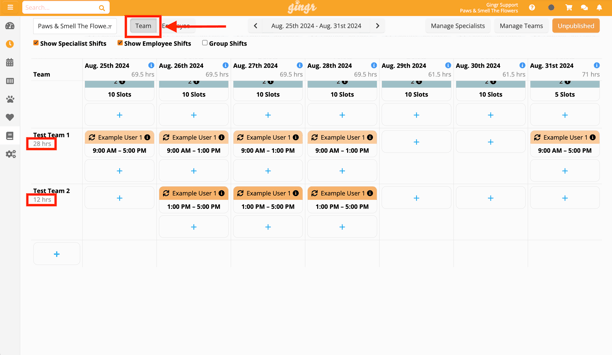
3. View Labor Hours by Team: Balance Workloads Fairly
When you switch to the team view, Gingr shows how many hours each team works per week. This allows you to monitor staffing levels in real time, address staffing shortages proactively, and ensure each team member is utilized effectively.
This is a game-changer for facilities with multiple services like:
- Daycare
- Boarding
- Grooming
- Training
With this data, you can:
- Identify teams that are consistently understaffed
- Rebalance schedules across departments
- Ensure no team is quietly carrying too much load
Optimized teams are happier teams, and happier teams deliver better care.
4. View Labor Hours by Employee: Prevent Burnout and Improve Retention
In the employee view, you can see total weekly hours per individual.
This helps you spot employees who may be overworked, especially those consistently working long hours, which can negatively impact their well-being and work-life balance while increasing the emotional toll of the job. This, in turn, allows you to identify underutilized team members and schedule more equitably across your staff.
You may consider hiring specialists as well, and having a clear view of your full-time and part-time staff's workload will help you make fair, informed decisions and distribute every hire's time accordingly.
Because predictive staffing isn’t just about saving money. It’s about building a sustainable workplace where your best people want to stay.
5. Split Shifts: Match Staffing to Real-World Demand
Pet-care demand isn’t linear, and your schedules shouldn’t be either.
With Gingr, you can:
- Create multiple shifts in a single day
- Assign employees to different teams as needed
- Add multiple time blocks within a team’s schedule
By optimizing appointment efficiency, tracking appointment notes, and improving client interactions, you can further enhance overall service quality and ensure your team delivers personalized care.
This flexibility lets you staff heavier during peak hours and scale back during quieter times—without overcommitting labor all day long.
It’s precision staffing, made simple.
6. Staff Activity, Tips, and Commissions: See the Full Picture
Gingr’s Staff Reports don’t stop at hours worked. You can also track:
- Staff training activity
- Tips earned
- Commissions from add-ons and services
When you combine labor data with performance insights, you unlock smarter decisions:
- Reward top performers
- Align staffing with revenue-generating roles
- Identify training opportunities that improve efficiency
By increasing productivity through these insights, your team can deliver exceptional care and enhance client satisfaction, ensuring your pet care business stands out.
That’s predictive staffing with purpose.

From Reactive to Proactive: Turning Reports into Action
Data is only powerful if you use it. AI-driven insights and data-driven insights support better decision making and enable practices to proactively manage staffing. To get the most out of Gingr, explore these tips and strategies that help pet-care businesses turn Gingr’s reports into real staffing improvements:
- Review labor reports weekly, not just monthly
- Compare labor hours to bookings and capacity
- Adjust schedules before problems show up
- Use historical trends to plan future weeks
- Check in with staff to validate what the data shows
The result if utilizing these analytics tailored to the needs of pet-care pros means fewer surprises, less stress, and detter outcomes for the whole team (and the pets in their care!).
Smarter Staffing & Operational Efficiency Start with Better Visibility
Predictive staffing isn’t about complicated forecasting models or extra software. It’s about visibility. Artificial intelligence (AI) and AI-powered solutions are the right tools for improving staffing visibility, enabling pet-care businesses to proactively manage resources and anticipate needs.
When you understand how your team actually works — by date, by team, and by employee — you can staff with confidence instead of crossing your fingers. Having the right technology infrastructure and innovative tools is essential to support predictive staffing, opening new avenues for operational improvement and efficiency.
Gingr gives you the tools to:
- Optimize team performance
- Control labor costs
- Support your staff
- Deliver consistent, high-quality care
That’s how pet-care businesses grow without burning out the people who make it all happen.
Ready to Stop Guessing and Start Planning?
If you’re tired of over- and understaffing swings, it might be time to let data do the heavy lifting. Predictive staffing not only streamlines your operations but also helps attract new clients, enhances your marketing efforts, and enables you to deliver better veterinary services to pet owners. By leveraging data-driven insights, your pet care business can achieve sustainable business growth.
Speak with a Gingr expert today to learn how built-in staff reports, schedules, and insights can help you optimize your team (and their time) for your best year yet!


Subscribe to the Gingr Blog