
 Boarding
 Daycare
 Grooming
 Training
 Dog Park / Dog Bar
 Enterprise

Long gone are the days when dog training was confined to physical spaces and conventional methods. Today, technology plays a pivotal role in enhancing dog training techniques, making them more accessible, effective, and engaging for both dogs and their trainers.
To start exploring how your business can leverage the latest innovations, let’s answer some frequently asked questions about using technology to level up your dog training practices.

Dog Training Technology FAQs
What is dog training technology?
Dog training technology includes any digital and hardware tools that dog trainers can use to enhance canine learning, behavior modification, and communication with pets and pet parents. Typically, these tools use technologies like AI, GPS trackers, remotes, and cameras to collect important data about pets and their behaviors.
What are the benefits of dog training technology?
Using dedicated dog training technology has several key benefits for both professional trainers and pet parents, including:
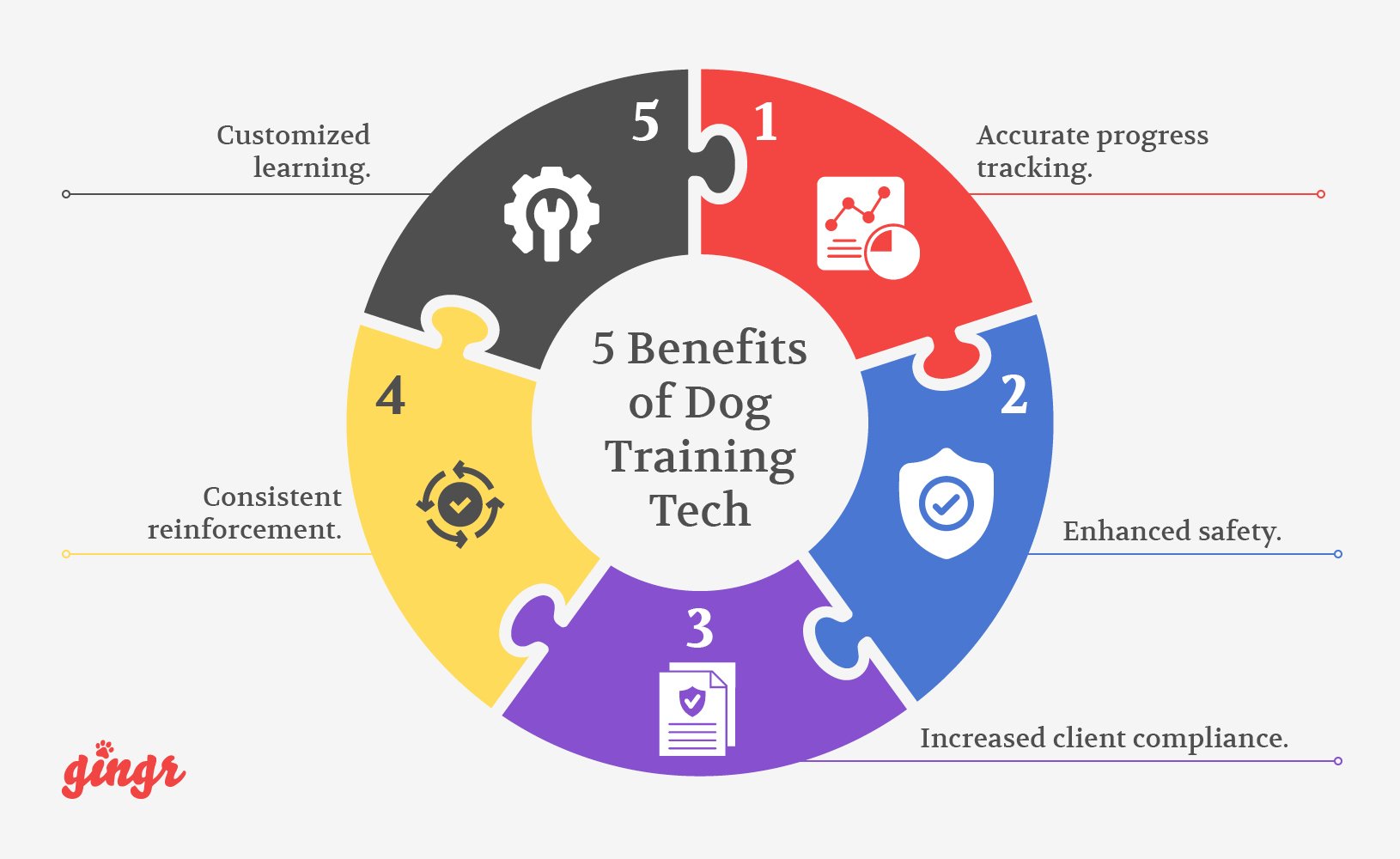
- Accurate progress tracking. Technology, like wearable devices, provides objective data on the pet’s activity levels, sleep, heart rate, and more, to show how effective training is. For instance, you might note whether training is helping to reduce anxiety or destructive behaviors.
- Enhanced safety. Wearables may include GPS tracking, ensuring pets don’t get lost during off-leash work. If they track biological data, they can also alert pet parents or trainers to health issues.
- Increased client compliance. For professional trainers, it can be challenging to encourage pet parents to consistently do their training “homework,” which can stall progress. Gamified apps and automated reminders will keep them on track.
- Consistent reinforcement. Reinforcing certain behaviors is a core strategy in dog training, but it’s most effective when done consistently. Automated treat dispensers and smart toys can provide timed rewards even when the pet parent or trainer is not directly interacting with the dog.
- Customized learning. Some training technology uses AI to study historical information and provide tailored training plans based on a dog’s specific needs and learning speed. You’ll find a plan that works for your dog and avoid the “trial and error” phase.
How can trainers use dog training technology?
There are many different kinds of dog training tech devices available, and trainers often get creative with how they use these tools to accommodate each dog’s unique needs. Some popular use cases include:
- Remote behavior monitoring
- Consistent reinforcement delivery (e.g., with an automated treat dispenser)
- Virtual skill instruction and coaching
- Automated mental stimulation and enrichment (e.g., with smart toys or puzzles)
- Streamlined client communication and feedback via digital report cards
- Digital record keeping for behavior logs
Top Dog Training Tools to Consider
Let’s cover some common tools trainers use to enhance training outcomes.
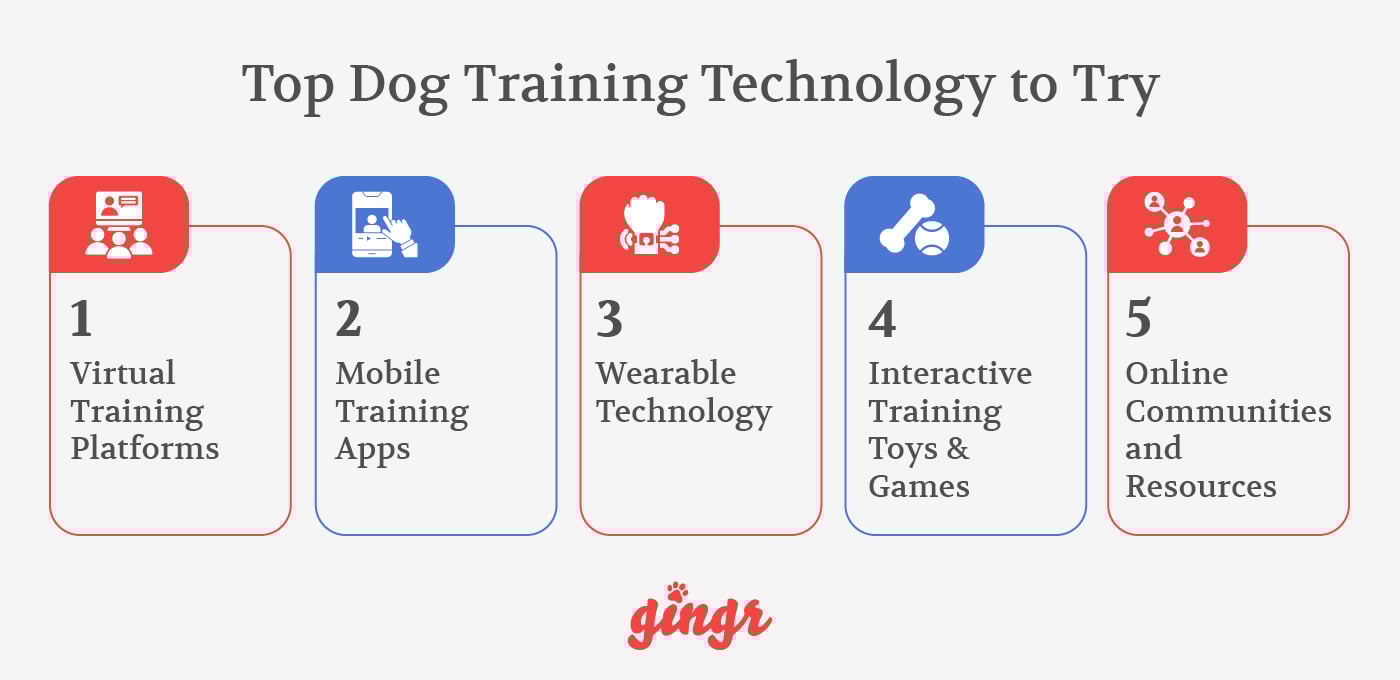
Virtual Training Platforms
The advent of virtual dog training platforms has been a game-changer, especially in times when face-to-face interaction may not be feasible. These platforms offer live video sessions, enabling trainers to coach pet parents and their dogs in real time, regardless of geographic barriers. This technology not only provides flexibility but also ensures that training can continue uninterrupted, maintaining consistency, which is crucial for effective learning.
Mobile Training Apps
Mobile apps have taken dog training to new heights of convenience. From providing daily training routines to offering a library of instructional videos and articles, these apps serve as a pocket-sized trainer. They often include progress-tracking features, enabling pet parents to set goals, monitor their dogs’ progress, and receive personalized recommendations based on their dogs’ performance and behavior.
Wearable Technology
Wearable tech for dogs, such as smart collars, harnesses, and activity trackers, offers valuable insights into a dog's behavior, health, and activity levels. By monitoring factors such as heart rate, sleep quality, and activity patterns, trainers and pet parents can better understand the dog's needs, stressors, and responses to training. This data-driven approach allows for a more tailored training regimen that aligns with the dog's physical and emotional well-being.
Interactive Training Toys and Games
Interactive training tools fuse technology with traditional dog toys to stimulate a dog's mind while providing entertainment. These tech-enabled toys often include features like treat dispensing, motion sensors, and sound effects to engage the dog and reinforce positive behavior. By turning training into a fun and rewarding activity, these tools can significantly enhance learning and retention.
Online Communities and Resources
Technology also facilitates vast online communities where dog trainers, pet parents, and enthusiasts can converge. Platforms like forums, social media groups, and blogs serve as repositories of knowledge, experience, and support. They offer a space to share tips, troubleshoot training challenges, and celebrate milestones, fostering camaraderie and collective growth.
How to Integrate Dog Training Technology Into Your Methods
Whether you are a professional trainer or just a pet parent looking to improve your dog’s behavior, it can be confusing to know exactly how this technology fits into more traditional training. This quick step-by-step breakdown can help you integrate your technology into your existing training regimen:
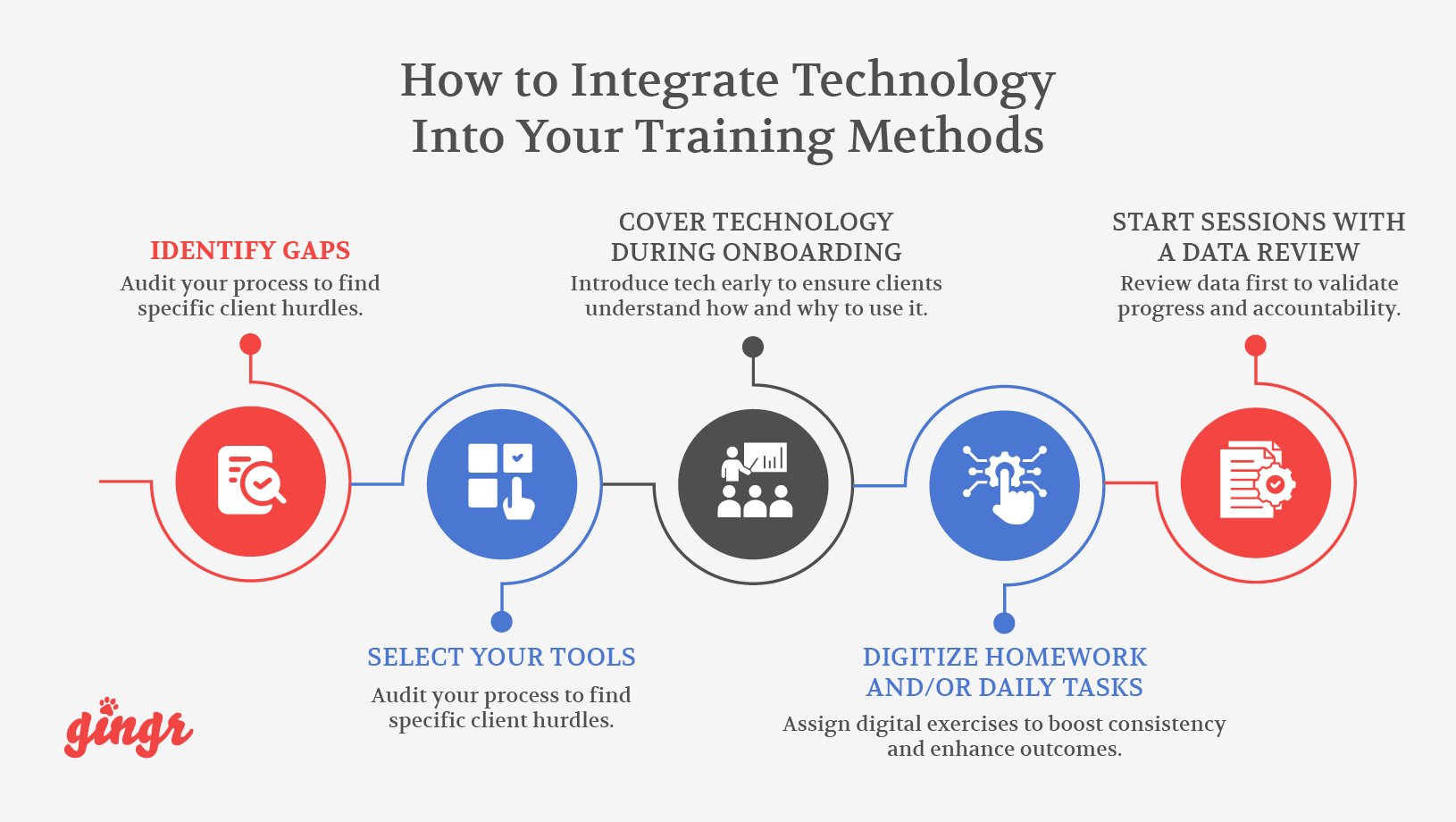
- Identify gaps. Audit your current training process to understand where your clients struggle the most or when progress tends to stall. Trainers may have trouble getting clients to complete their training homework, while pet parents may be struggling to manage distractions. Then, determine which specific technology solves that problem.
- Select your tools. Choose tools that enhance your existing methods, not fundamentally change them. Focus on adding just one or two intuitive tools at once to avoid overwhelming clients or pets.
- Cover technology during onboarding. Trainers should introduce the technology early, helping the client learn to use it and highlighting how it supports their training goals.
- Digitize homework and/or daily tasks. Use a management app or video platform to assign specific exercises between sessions to boost consistency and accountability. Consider asking clients to log their practice hours or provide short clips for review.
- Start sessions with a data review. Kick off each lesson by reviewing the data your training technology collects (activity graphs, homework logs, or video submissions) to hold the client accountable and validate their progress since the last visit.
Finally, don’t forget to take advantage of this data to make broader changes. For example, if the data shows that your current methods for reducing anxiety and reactivity aren’t working, modify your training plan. Round-the-clock monitoring technology helps you address issues that don’t surface during a standard one-hour session, improving training outcomes.
Wrapping Up
Looking ahead, technologies like artificial intelligence (AI) and augmented reality (AR) hold promising potential for dog training. AI can offer personalized, adaptable training programs at scale, while AR could create immersive training scenarios that simulate real-world challenges and distractions—all from the safety of home.
Keep in mind that the role of technology in dog training is multifaceted and continually evolving. Trainers and pet parents should continue embracing new tools to access a wealth of resources that make training more efficient, enjoyable, and effective.
As we forge ahead, the potential for technology to further revolutionize dog training is boundless, promising a future where every dog has the opportunity to learn and thrive, supported by the best that technology has to offer. And as a pet business owner, this means ensuring you always have flexible, specialized business management software like Gingr on your side. Book a demo now!


Subscribe to the Gingr Blog

.svg)