 Boarding
 Daycare
 Grooming
 Training
 Dog Park / Dog Bar
 Enterprise

So You Got a Christmas Puppy!
There’s nothing quite like the ultimate Christmas-morning surprise: One minute you’re sipping cocoa, the next you’re holding a wiggly bundle of paws, ears, and possibilities.
If you’re a brand-new puppy parent, welcome to the wonderful, exhausting, tail-wagging adventure ahead! The first 30 days with a puppy are magical and chaotic in the best way. Importantly, they’re also when habits are formed, trust is built, and a whole lot of learning happens (for both of you).
This guide is here to help you survive that crucial first month and form a tight, lifelong bond with your new best friend.

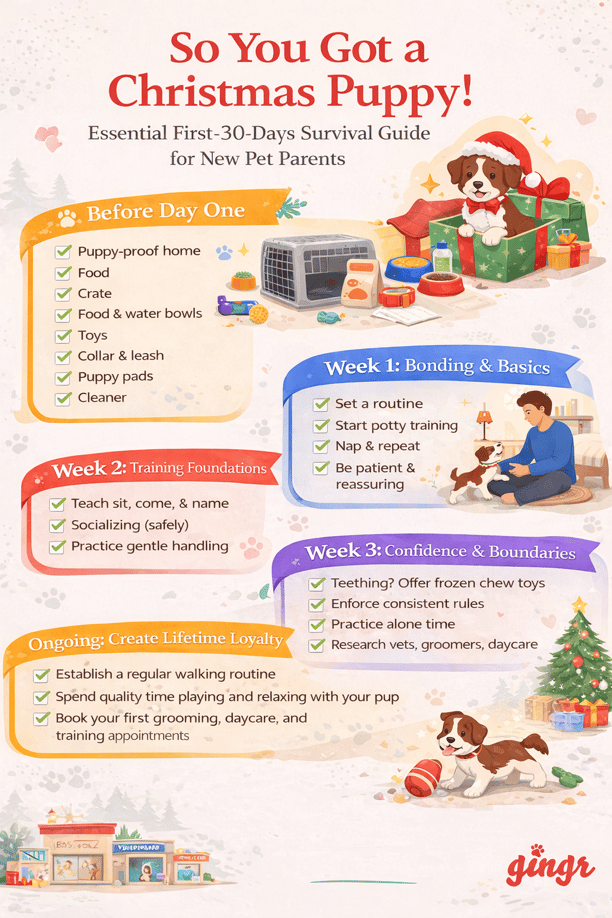
Before Day One: Set the Stage for Success
Before your puppy even steps its cute paws in your home, a little prep goes a long way.
Your Puppy Starter Checklist
Make sure you have:
- Food recommended by your breeder, foster family, shelter, or vet
- Food and water bowls
- A properly sized crate or safe sleep area
- Puppy-safe toys (think: chew, tug, puzzle)
- Collar, harness, and leash
- Puppy pads (accidents happen!)
- Enzymatic cleaner (trust us on this one)
Pro tip: Puppy-proof your space like you would for a toddler. Shoes, cords, plants, and holiday decorations are all fair game to a curious pup.
Week 1: Bonding, Basics & Big Feelings
Remember: Your puppy has just left everything they’ve ever known. The first week is about comfort, consistency, and connection.
Focus Areas:
Routine is everything
Feed, potty, play, nap, repeat. Puppies thrive on predictability, which helps them feel safe and speeds up training.
Potty training starts now
Take your puppy out:
- First thing in the morning
- After meals
- After naps
- After playtime
- Right before bed
Anticipate accidents even with regular potty breaks! Potty training with kiddos doesn't happen in a snap, after all. Celebrate successes like your new furry friend just won Best in Show.
Sleep (for everyone)
Puppies sleep a lot, up to 18–20 hours a day. You may want to play with your new pup 24/7, but remember that naps prevent overtired zoomies (and nipped ankles). Sleep is fundamental to growth and restoring their little bodies.
Expect emotions
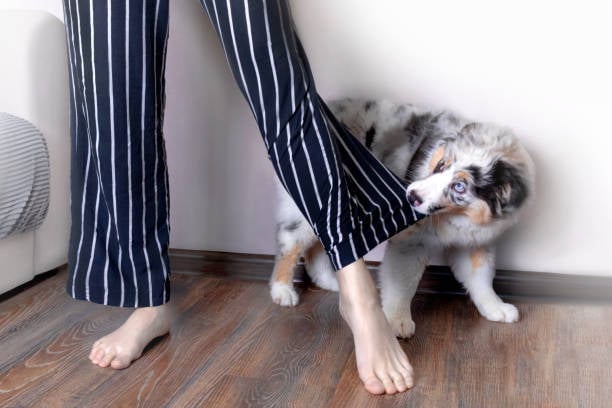
Whining, mild fear, or clinginess are normal. Patience and reassurance go a long way.
Week 2: Training Foundations & Social Skills
Once your puppy starts settling in, it’s time to gently introduce some structure into their (and your) daily routine..
Focus Areas:
Name recognition & simple cues
Start with:
- Name
- 'Sit'
- 'Come'
- Gentle leash walking
Keep sessions short — 2 to 5 minutes at a time.
Socialization (safely!)
Expose your puppy to:
- New sounds (vacuum, doorbells, traffic)
- Different surfaces (grass, tile, carpet)
- Friendly people of all ages
This doesn’t mean dog parks yet. Vaccinations come first!
Handling practice
Touch paws, ears, mouth, and tail regularly. This helps future grooming and vet visits feel a little more stress-free.
Week 3: Confidence, Boundaries & Real Life
By now, your puppy is starting to show their personality... and maybe test a few limits.
Focus Areas:
Teething is real
Provide appropriate chew toys and redirect gently. Frozen toys can be a lifesaver.
Consistency matters
If it’s “no couch” today, it’s no couch tomorrow. Mixed messages confuse puppies.
Independence training
Practice short periods apart so your puppy learns that alone time is safe (and temporary).
Start planning professional pet care
Research nearby and highly reviewed pet-care services like:
- Veterinarians
- Trainers
- Groomers
- Daycare or boarding facilities
Even if you don’t need them yet, having trusted pros lined up reduces stress later.

Week 4: Building a Long-Term Routine
The final stretch of your first month is about turning chaos into confidence.
Focus Areas:
Refine your daily schedule
A predictable routine supports better behavior, easier training, and calmer days.
Mental enrichment
Tired brains are just as important as tired bodies. Try enrichment activities like:
- Puzzle toys
- Sniff games
- Short training challenges
Celebrate progress
Look how far you’ve come! Fewer accidents, better sleep, more cuddles... those wins matter.
Common First-Month 'Is This Normal?' Moments
Yes, these are all normal:
- Biting hands (hello, teething)
- Random zoomies
- Fear of new objects
- Selective hearing
- Stealing shoes, socks, or other non-toy items
- Sudden bursts of confidence… followed by naps
If something feels off, trust your instincts and talk to your vet or trainer.
Final Thoughts: You’re Doing Better Than You Think
The first 30 days with a puppy can feel overwhelming to a new pet parent, but they’re also the foundation for a lifetime of trust, companionship, and tail wags. Remember: You don’t need to be perfect. You just need to be consistent, patient, loving, and present.
Every well-adjusted dog you admire once had accidents on the rug and chewed something they weren’t supposed to! You’ve got this.
Looking for Professional Pet Care You Can Trust?
Whether it’s daycare, boarding, grooming, or training, the best pet-care businesses use Gingr to stay organized, communicate clearly, and create stress-free experiences for pets and their people. Businesses who offer a Pet Parent Portal and regular updates while your pup is in their care help ease the anxiety while you're away from your new family member.
Because when pet parents feel supported, everyone wins. Learn more about Gingr.


Subscribe to the Gingr Blog