
 Boarding
 Daycare
 Grooming
 Training
 Dog Park / Dog Bar
 Enterprise
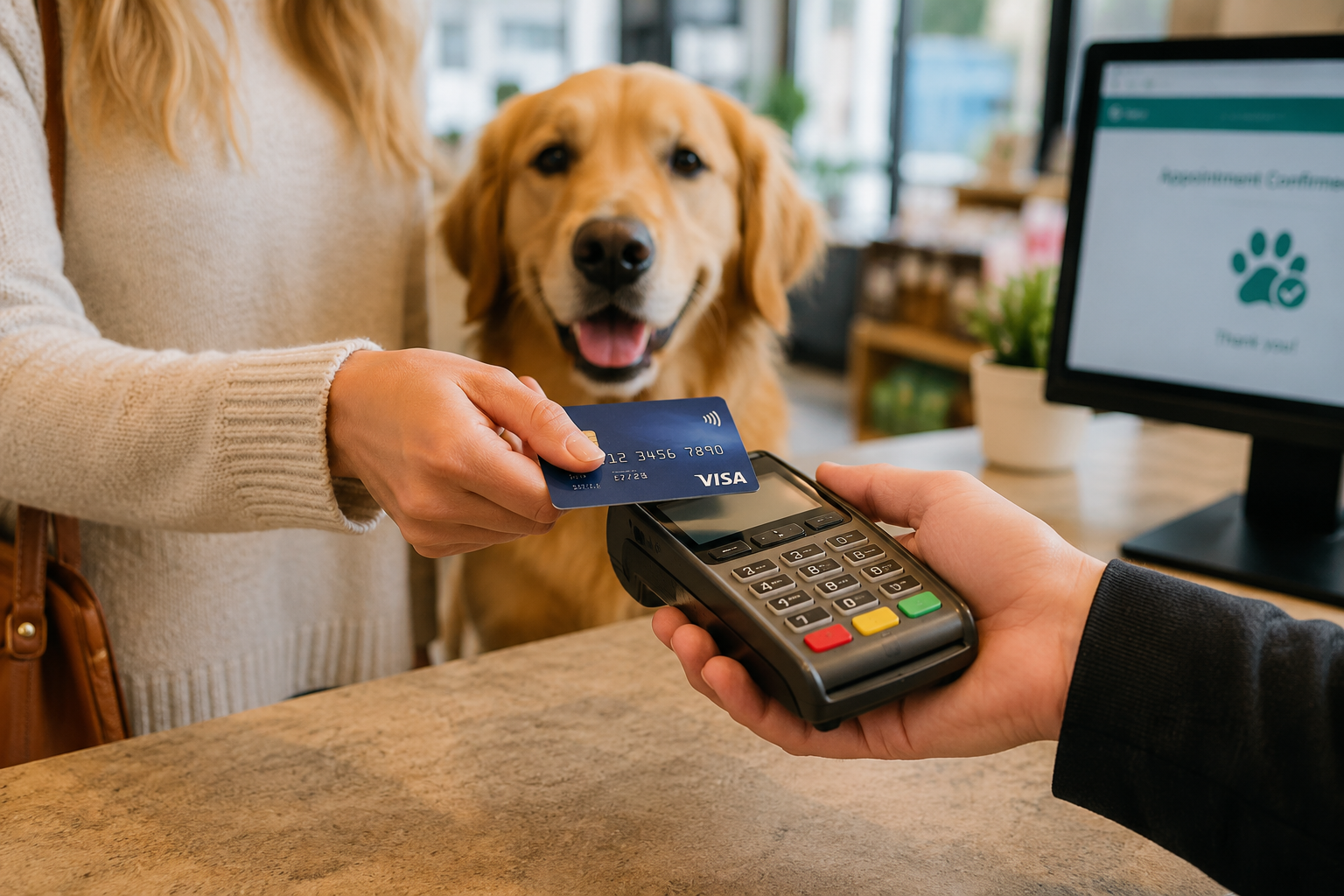
For pet-care businesses, credit card processing fees—sometimes called "credit card swipe fees"—are one of those costs that’s easy to overlook until you add them up. These credit card swipe fees typically cost small businesses between 2% and 3.5% per transaction. At 3-3.5% per transaction, a business processing $500,000 in annual card volume could be losing $15,000-$18,000 a year to fees alone.

Many businesses in the pet-care industry are seeking ways to offset these real costs and protect their revenue. Surcharges are an additional fee or extra fee added to transactions to help offset processing fees and associated fees. This practice is commonly used by pet-care businesses to manage expenses related to accepting credit cards.
Merchant fees and credit card fees are set by credit card companies, which also establish requirements and regulations for credit card surcharge practices. Businesses must comply with these requirements in addition to state laws when applying surcharges.
Today, we’re introducing a third option. Gingr Surcharging is a new feature built directly into Gingr Payments that helps pet care businesses offset processing fees and associated fees by applying a configurable credit card surcharge to eligible transactions. Surcharges are additional fees added to a transaction when a customer pays by credit card, designed to offset the costs of processing credit card payments, including interchange and assessment fees.
How Surcharging for Credit Card Processing Fees Works
Surcharging with Gingr is designed to be simple. Once you enable it in your Gingr Payments dashboard, here’s what happens:
- Choose your surcharge rate (anywhere from 0–3%) and complete a quick setup agreement.
- Gingr applies the surcharge automatically to eligible credit card transactions when customers pay, whether in person or online, including in-store, through the Pet Parent Portal, and on recurring memberships. This surcharge helps cover payment processing fees.
- Pet parents see a clear line item at checkout and on receipts when paying in person or online. They confirm the total before the payment processes.
- Debit, prepaid, and gift cards are never surcharged. Gingr detects the card type automatically. Surcharges cannot be applied to debit cards, prepaid cards, or gift cards and are typically capped at 3%.
Encouraging customers to use lower fees payment methods, such as cash or debit, can help reduce overall costs for your business.
Why This Matters for Your Pet Business
Surcharging isn’t about adding fees for pet parents. It’s about recovering a cost you’re already paying by accepting credit card payments. Your base service prices stay exactly the same. Pet parents who prefer not to pay the surcharge can simply use debit or another non-credit payment method. By implementing surcharging, pet care businesses can save money by offsetting processing fees that would otherwise impact their margins.
For high-volume businesses — especially those with boarding, daycare, grooming, and membership-based revenue — the impact adds up quickly. A 3% surcharge on credit card payments could mean thousands of dollars back in your pocket each year, without changing how you run your business. Additionally, businesses can offer discounts for non-credit card payments to encourage customers to use lower-cost payment methods, helping further save money on payment processing fees.
Many pet-care businesses are turning to surcharging to manage the costs of accepting credit card payments, which can be around 3% of each transaction. Implementing surcharges can help pet-care businesses recapture processing fees, which can translate into thousands of dollars each year that can be reinvested into the business.
Research indicates that many consumers are now aware that small businesses incur costs to accept credit cards and are willing to share these costs through surcharges for the convenience of using their preferred payment method. A significant portion of customers, approximately 36%, reported that they regularly carry cash, but many still prefer the convenience of credit card payments even when surcharges are applied.
Built for Compliance and Transparency
Surcharging is regulated, and the rules vary by state and card network. Surcharging regulations are imposed at the state level, with states like California and Massachusetts having restrictions or prohibitions.
Traditional credit card surcharging is subject to legal restrictions that vary by state and requires compliance with card brand rules. Gingr’s implementation includes safeguards to help you stay aligned with current guidelines:
- Surcharge rates are capped at 3%, in line with Visa and Mastercard rules
- Card type detection is automatic — no staff guesswork required
- Surcharges are clearly disclosed before payment and itemized on receipts
- Refunds automatically include the surcharge, fully or proportionally
Businesses must ensure their surcharge policies comply with local laws and credit card network regulations, including limits on surcharge amounts and requirements for customer notification.
Maintaining transparent communication with customers is essential. Clearly disclose any additional fee, extra fees, or merchant fees at the point of sale and on receipts. Unexpected fees can lead to customer frustration, so businesses should communicate fee-free payment options such as cash or debit cards effectively.
Implementing surcharges can lead to negative customer reactions, as some customers may perceive these fees as penalties for using their preferred payment method, potentially impacting customer satisfaction and loyalty. Businesses should take careful consideration of court decisions, state laws, and stricter rules that may apply to surcharging practices, and always consult legal counsel to ensure compliance.
Getting Started with Gingr Surcharging
Surcharging is available now to all U.S. Gingr Payments merchants. To enable it, log into your Gingr Payments dashboard, navigate to Surcharging, and complete the setup agreement. It takes just a few minutes.
To charge a convenience fee, businesses must offer customers a standard, no-fee alternative. The flat-rate convenience fee of $4.50 applies to non-recurring, card-not-present transactions. The convenience fee charged by Gingr automatically appears as a line item on customer invoices, and Gingr retains $0.75 from each convenience fee to manage operational costs and associated fees, returning the remainder to the pet business.
Ensuring compliance with PCI standards is essential for protecting cardholder data and maintaining a secure, pci compliant payment environment, especially for online payments and at the front desk. Support teams from payment processors can help pet care businesses navigate compliance, troubleshoot security issues, and ensure smooth business operations.
Pet-care businesses should regularly review their surcharging practices and payment options to ensure they are offering competitive rates, saving money, and effectively managing associated fees while maintaining compliance with consumer protection laws.
Payment Processing Made Simple with Gingr
If you’re not yet on Gingr Payments, this is a great reason to make the switch. One platform, one support team, and now built-in margin protection.
Surcharging for CardConnect Customers
CardConnect surcharging is now available. If your Gingr account processes payments through CardConnect (Fiserv), you can now enroll to recover credit card processing fees the same way — up to 3% on eligible credit card transactions.
CardConnect enrollment is handled through the Gingr merchant support team rather than self-serve in the dashboard. The enrollment process involves a brief agreement per merchant ID, and our team handles the backend activation. Reach out to your Gingr representative or visit gingrapp.com/surcharging-demo to get started.
Once active, the CardConnect surcharging experience for pet parents is identical to the Gingr Payments version — automatic card type detection, clear disclosure at checkout, itemized on receipts, capped at 3%.
Check out our support article on getting set up in 10 minutes or less!

FAQ: Gingr Surcharging
What is credit card surcharging?
A credit card surcharge is an additional fee added to eligible credit card transactions. Credit card companies set specific requirements and regulations for surcharging, and this fee helps businesses offset credit card fees associated with payment processing.
How does Gingr Surcharging work?
Gingr Surcharging is built directly into Gingr Payments. Once enabled, the system automatically applies your configured surcharge rate (up to 3%) to eligible credit card transactions. The surcharge appears as a separate line item during checkout and on receipts, so pet parents can review the total before completing payment. This surcharge helps cover merchant fees and associated fees incurred during credit card processing.
Gingr offers a built-in cost-recovery tool that allows pet-care businesses to manage credit card processing fees, and Gingr’s support teams can help ensure compliance and smooth payment processing. Batching transactions instead of processing them individually can help businesses reduce per-transaction fees charged by payment processors. Encouraging customers to use payment methods with lower fees, such as debit cards or cash, can help businesses offset processing fees and minimize overall costs.
Offering multiple payment options, including digital wallets, mobile card readers, and online payments, can improve customer experience, lead to faster checkouts, and help cut costs. Businesses can reduce or eliminate the need for surcharges by using cost-effective payment processors that offer competitive rates and pricing structures, and by encouraging customers to use lower cost methods such as cash or debit cards. Offering discounts for non credit card payments can also encourage customers to choose lower cost methods and improve satisfaction.
Can I choose my surcharge amount?
Yes. Businesses can configure a surcharge rate anywhere from 0–3%, depending on their preferences and local regulations. Gingr automatically helps enforce card network limits.
Is surcharging legal?
Surcharging regulations vary by state and card network. Some states have restrictions or disclosure requirements, and Visa and Mastercard have their own compliance rules. Businesses should always consult legal counsel to confirm eligibility and ensure compliance in their jurisdiction.
Does Gingr help with surcharge compliance?
Yes. Gingr includes built-in safeguards designed to support compliance and transparency, including:
- Automatic card type detection
- Clear surcharge disclosures before payment
- Itemized receipts
- Automatic surcharge refunds when transactions are refunded
- A maximum surcharge cap of 3%
Will pet parents see the surcharge before they pay?
Absolutely. Transparency is an important part of compliant surcharging. Pet parents will see the surcharge clearly displayed at checkout and on their receipt before payment is processed.
Can customers avoid the surcharge?
Yes. Customers pay a surcharge only when they choose to pay with a credit card. To avoid the surcharge, customers can pay with a debit card or another non-credit payment method, which will not incur any additional fee.
Is surcharging available for CardConnect customers?
Yes. CardConnect surcharging is now available for eligible U.S. merchants. The enrollment process is handled through the Gingr merchant support team. Contact your Gingr representative or visit gingrapp.com/surcharging-demo to get started. The feature behavior — card type detection, surcharge display, percentage range — is the same as the Stripe implementation.
How much money can pet-care businesses save with surcharging?
The savings can add up quickly and help pet care businesses save money by recovering processing costs. For example, a business processing $500,000 annually in credit card transactions could potentially recover $12,000–$15,000 in processing costs each year, depending on transaction volume and surcharge settings.
Does surcharging apply to online bookings and memberships?
Yes. Gingr Surcharging works across eligible payment channels, including:
- In-person front desk transactions
- Online bookings
- Pet Parent Portal payments
- Recurring memberships
What happens if a customer receives a refund?
When a refund is processed, Gingr automatically refunds the surcharge fully or proportionally based on the transaction amount refunded.
How do I enable Gingr Surcharging?
Current Gingr Payments merchants can enable surcharging directly from the Gingr Payments dashboard by navigating to the Surcharging section and completing the setup agreement.
Do I need Gingr Payments to use surcharging?
Yes. Surcharging is available exclusively through Gingr Payments, which provides integrated payment processing, automated reconciliation, reporting, and payment management tools designed specifically for pet care businesses. This ensures that pet care business owners can manage transactions, invoicing, and security measures tailored to the unique needs of grooming, boarding, daycare, and other pet-related services.
Why are more pet-care businesses using surcharging or convenience fees?
Many pet-care businesses in the pet-care industry are looking for ways to protect margins without raising service prices across the board. Surcharging is increasingly common as a way to manage payment processing fees, allowing businesses to recover a portion of these costs while still offering customers flexible payment options and a modern checkout experience.
Compliance Notice: Surcharging regulations vary by state and card network. Always consult your legal counsel to confirm eligibility in your state and jurisdiction.


Subscribe to the Gingr Blog