 Boarding
 Daycare
 Grooming
 Training
 Dog Park / Dog Bar
 Enterprise

Dog licenses may seem like a formality, but they’re a legal requirement in many places and a cornerstone of responsible pet ownership. Those who welcome dogs into their homes and lives have specific responsibilities for obtaining and maintaining a dog license, ensuring they comply with local laws. Whether you’re a pet parent navigating city ordinances or a pet business working with local authorities, understanding dog licensing is crucial.

Dog License Basics
What Is a Dog License?
A dog license is a legal registration with your local government that links your pet to you as their handler. It typically includes a unique ID tag that your dog must wear on their collar. When a dog is licensed, their parent typically receives this tag, which also features the contact details of the licensing agency. If someone finds a loose dog wearing the tag, they can contact the agency to help reconnect the dog with its parent.
Municipalities requiring dog licenses typically mandate annual or biennial renewal. A new license is needed when registering a dog for the first time. In the United States, county animal services, city clerk offices, or local health departments typically issue licenses.
Why Dog Licenses Matter
A dog license acts as:
- A form of identification
- Proof of rabies vaccination
- A tool to reunite lost dogs with their parents
- A source of funding for local animal services
Keeping these uses in mind, here are a few key reasons why it is important to have a dog license:
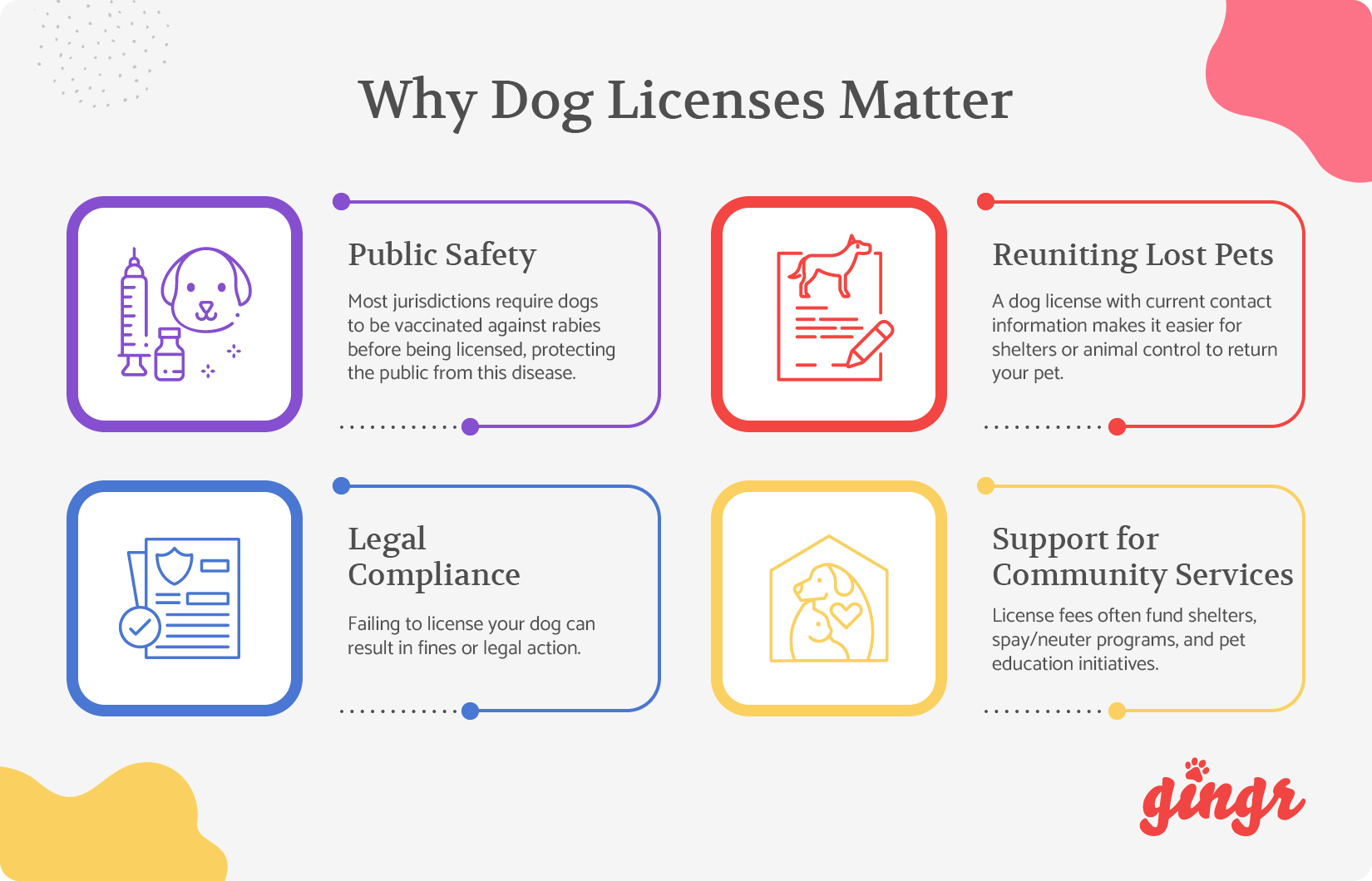
- Public safety: Most jurisdictions require dogs to be vaccinated against rabies before being licensed. This ensures area-wide protection from a deadly disease. Licensing also helps authorities monitor and control dangerous dogs and keep potentially hazardous animals off the streets.
- Reuniting lost pets: A dog license with current contact information makes it easier for shelters or animal control to return your pet if they get lost.
- Legal compliance: Failing to license your dog can result in fines or legal action, depending on your city or state. For example, in New York City, dog parents may be fined for violating licensing requirements.
- Support for community services:
The Cost of Dog Licenses
Dog licensing fees in the U.S. vary based on:
- Municipality
- Whether the dog is spayed/neutered
- Length of license (multi-year licenses may offer discounts)
- Seniors and residents with disabilities (often eligible for reduced fees)
Here's an average cost breakdown:
|
License Type |
Average Annual Fee |
|
Spayed/Neutered Dog |
$10–$20 |
|
Unaltered Dog |
$30–$75 |
|
Senior Discount |
Often 50% off |
|
Service Dogs |
Typically Free |
|
Replacement Tag |
$5–$10 |
The Consequences of Not Having a Dog License
If pet parents do not comply with local requirements around having a dog license, they may face legal consequences, such as:
- Fines ranging from $25 to $250 per violation.
- Impoundment fees to cover boarding, vaccination, and licensing fees if your dog is picked up.
- Citations or legal action, as repeat offenders may face court summons.
For example, in Los Angeles County, failure to license a dog can result in a $300 fine and additional penalties. And in New Jersey, dogs found unlicensed after the renewal deadline may be impounded until fees are paid.
What to Know About Dog Licenses
For Pet Parents
Pet parents are the frontline of responsible licensing. To obtain a dog license, they must apply through their local agency, which you can typically do online, by mail, or in person. You are typically required to license your dog if:
- The dog is older than 4-6 months (depends on the jurisdiction)
- You’ve lived in the area for more than 30 days
- You’ve adopted or acquired a new dog
In most areas, you’ll need the following to successfully obtain a dog license:
- Proof of rabies vaccination
- Spay/neuter certificate (if applicable)
- Microchip ID (optional but recommended)
- Payment (credit card, check, cash, or money order)
Most licenses must be renewed annually, but some offer two- or three-year options if your dog’s rabies vaccine is valid for the same duration. You can usually renew your dog license online, by mail, or in person.
For Pet Businesses
Pet businesses, especially those that board, groom, or train dogs, must be proactive about licensing. Your business does not need to obtain a license for clients’ dogs—this is the pet parent’s responsibility.
However, your business should practice due diligence by:
- Requiring proof of licensing before providing services
- Keeping vaccination and license status records
- Reporting unlicensed pets (depending on local laws)
Additionally, there may be some business licenses you need, like:
- A kennel license (if you house a certain number of dogs)
- Zoning approval for operating in specific areas
- Commercial dog walker permits (e.g., in San Francisco or NYC)
- An animal facility license (issued in some states, like California)
Expert Tip: Always contact and consult with your local Department of Animal Services and business licensing authority for your area’s specific rules and regulations.
Do I Need a Dog License?
Licensing requirements and required documentation vary from state to state. Select your state below to see whether it requires dog licenses at the state level:
How to Obtain A Dog License
The exact process needed to obtain a dog license varies depending on your location. However, these are the basic steps you’ll need to take:
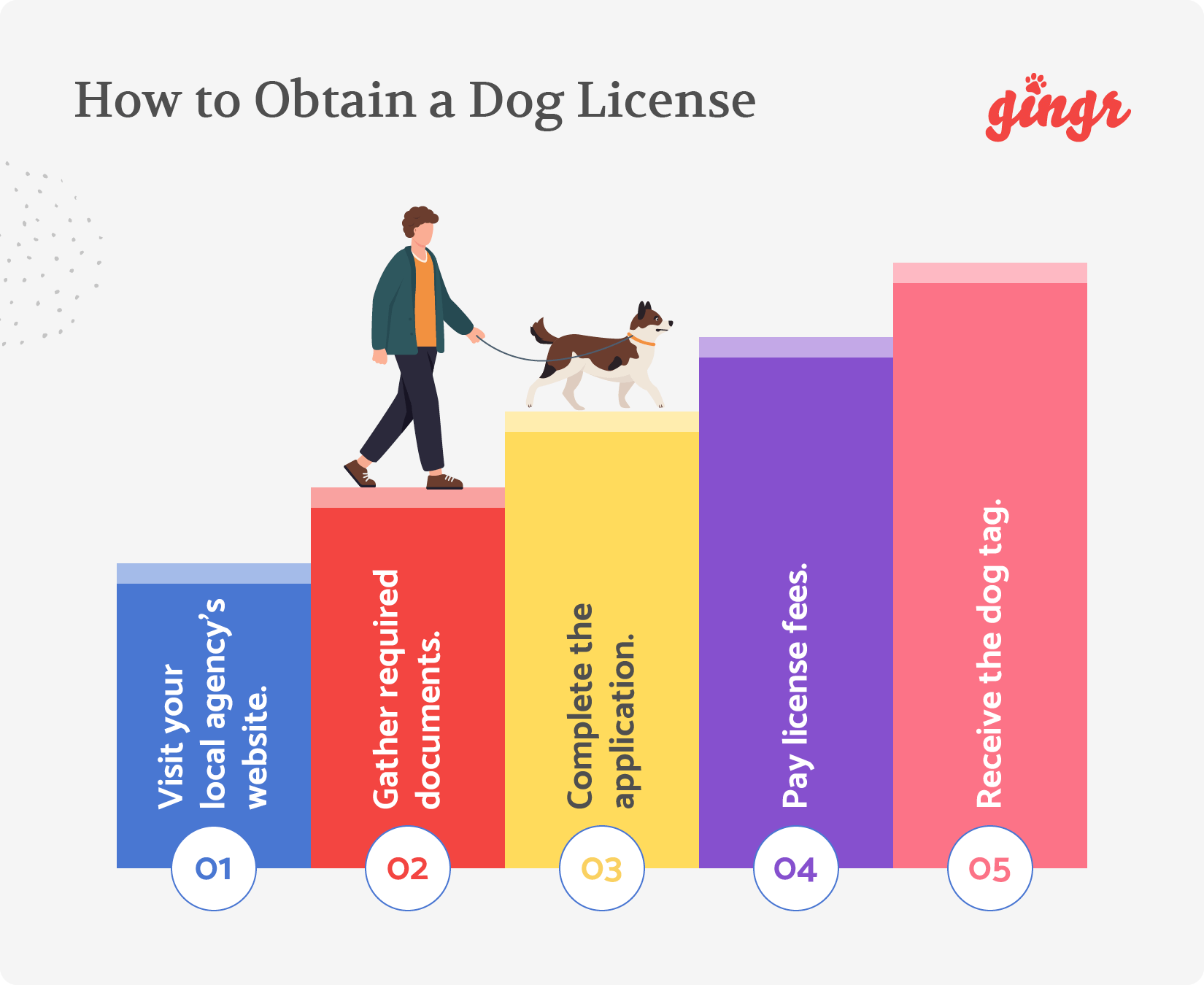
- Visit your local agency’s website. To find it, search for “[Your County] dog license.”
- Gather required documents. Typically, you’ll need your dog’s rabies certificate, spay/neuter certificate, and proof of address/residency.
- Complete the application. Many counties offer online portals. Mail-in and in-person options may also be available.
- Pay license fees. Again, the cost will vary depending on factors like location, your age, the length of the license, etc.
- Receive the dog tag. Attach the tag with your dog’s unique ID number to their collar immediately.
Other Permits and Forms of Identification
Some states and municipalities may require additional steps. You can verify whether you need these with your city clerk’s office, the local department of animal services, or your county’s public health department.
Pet parents may be legally required to use a license tag, and it is strongly recommended that pet owners have their dogs microchipped for long-term identification. Pet businesses may need certain permits, like a kennel license or grooming facility license, although this varies by state.
How to Support Pet Parents
Your pet business has a unique opportunity to bridge the gap between pet parents and local compliance laws. Whether you run a boarding facility, grooming salon, daycare, or training center, you can play an active role in helping clients stay informed and compliant with dog licensing regulations.
Here's how:
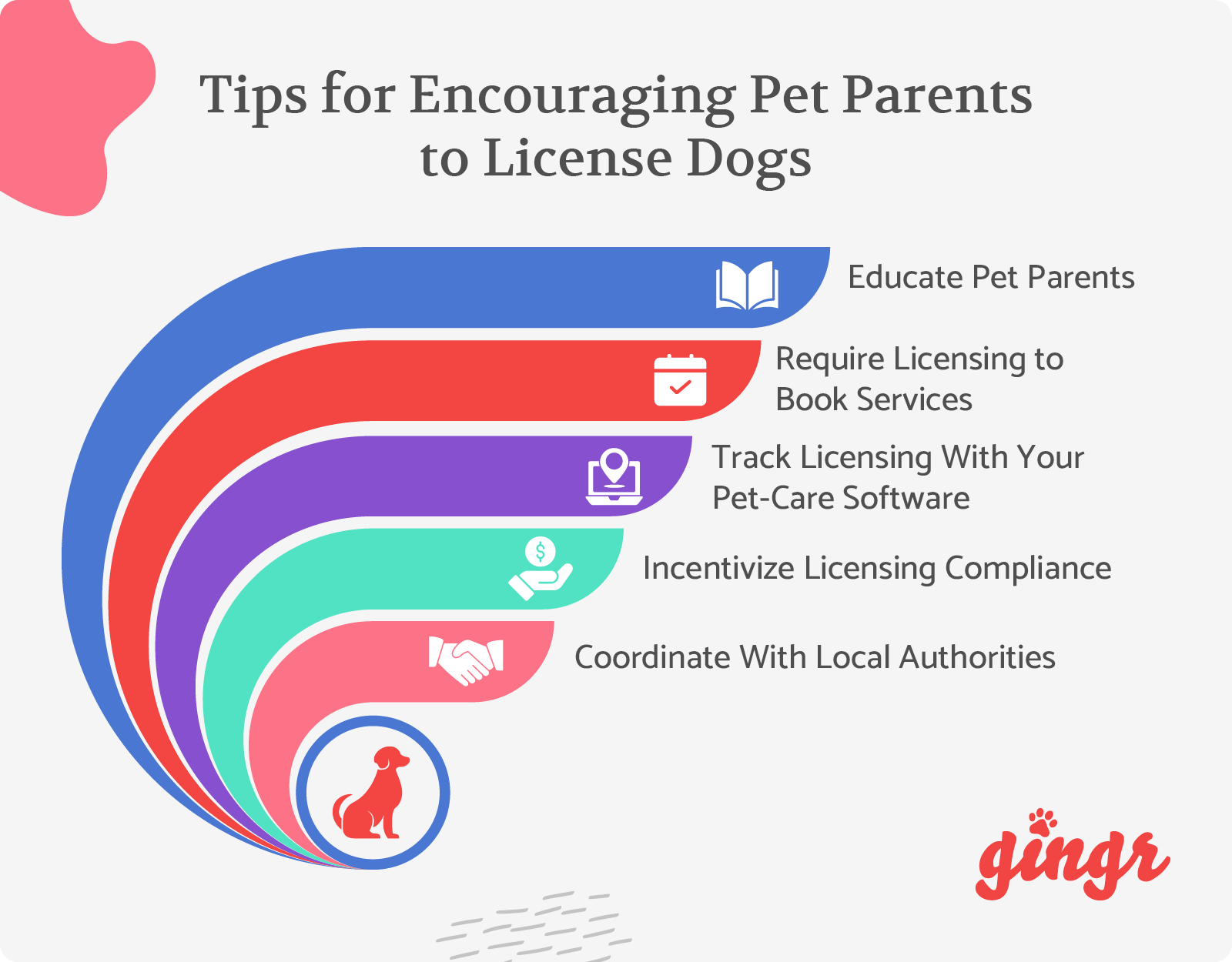
1. Educate Pet Parents
Many pet parents are unaware that licensing is required in their area, or they forget to renew annually. As their trusted pet-care provider, you can:
- Provide printed or digital handouts about local requirements.
- Share licensing deadlines and reminders in your email newsletters.
- Display signage at your front desk or check-in counter with licensing information.
- Link to local licensing agencies on your website or booking portal.
Pro tip:Partner with your local animal services department to distribute official pamphlets or sponsor pet licensing awareness events.
2. Require Licensing Documentation to Book Services
To encourage responsible pet parenting, implement policies that:
- Request proof of licensing during onboarding or the initial client registration process.
- Require valid licenses as part of your vaccination policy or services agreement.
- Add reminders to renew licenses annually alongside your rabies vaccination reminders.
Pro Tip: Add these policies to your customer agreements when onboarding new clients.
3. Track Licensing With Your Pet-Care Software
Modern pet care software makes it easy to store and manage licensing documents just like you do with vaccinations or medical records. Take it a step further by:
- Uploading digital copies of clients’ dog licenses.
- Setting expiration reminders to notify staff and clients before licenses expire.
- Creating custom fields in pet profiles to track license number and issue date.
- Include license status in staff-facing check-in screens or client portals.
Using your software to manage licensing information creates a seamless, professional experience for clients and keeps your team informed and compliant.
Pro Tip: To make this process quick and convenient, choose business management software that allows pet parents to upload files from the customer portal.
4. Incentivize Licensing Compliance
Encourage participation by offering perks to clients who show proof of a current license, such as:
- Discounted service packages
- Free dog treats or grooming add-ons
- Monthly raffles for licensed dogs
Incentives like these not only make pet parents feel special and prompt return bookings, but they also promote public health and position your business as a responsible community partner.
Pro Tip: Set up a custom icon (e.g., a gold star) to visually flag pets with valid licenses in your system.
5. Coordinate With Local Authorities
If your facility already hosts events like vaccination clinics, adoption days, or training workshops, collaborate with local animal control or public health departments to offer on-site licensing services. This makes it easier for pet parents to get everything done in one place, and it aligns your brand with pet-care best practices.
Pro Tip: Promote these events well in advance via SMS and email, and consider offering some kind of small incentive to boost attendance (e.g., a free nail trim voucher).
Dog License FAQs
Do indoor-only dogs need a license?
Yes, in most places. Licensing is based on ownership, not where the dog lives or roams.
What if I move to a new city?
Most jurisdictions require you to update your dog’s license within 30 days of relocating.
Can I transfer a dog license to a new parent?
Some areas allow transfers; you’ll need to file ownership change paperwork.
How do I prove I licensed my dog?
You'll receive a certificate and tag; some counties also offer digital records.
Is there a grace period for new puppies?
Yes, many municipalities allow a grace period until the puppy is 4-6 months old.
Wrapping Up
Dog licensing is more than just a legal checkbox—it’s a vital part of pet health, safety, and community responsibility. Whether you're a pet parent navigating local requirements or a pet business supporting responsible ownership, staying organized and compliant benefits everyone. Gingr makes it easy to track licensing, vaccination records, and other essential pet information—all in one powerful, user-friendly platform.


Subscribe to the Gingr Blog