 Boarding
 Daycare
 Grooming
 Training
 Dog Park / Dog Bar
 Enterprise

As a pet business owner, you need to keep your finger on the pulse of the latest industry trends. By understanding what pet parents want for their pets—and what they’re willing to spend their hard-earned dollars on—you can adapt your products and services to fit those preferences and promote them more effectively.
In this guide, we’ll explore some of the top pet industry trends and examples for 2026 to help you determine how to apply them to your business. To get started, here are some statistics from this year to sum up the current state of the pet industry.
State of the Pet Industry in 2026: Key Statistics
Based on data from 2010 to 2025, the pet and animal supplies industry is in a good spot—in fact, it's on an upward trajectory:
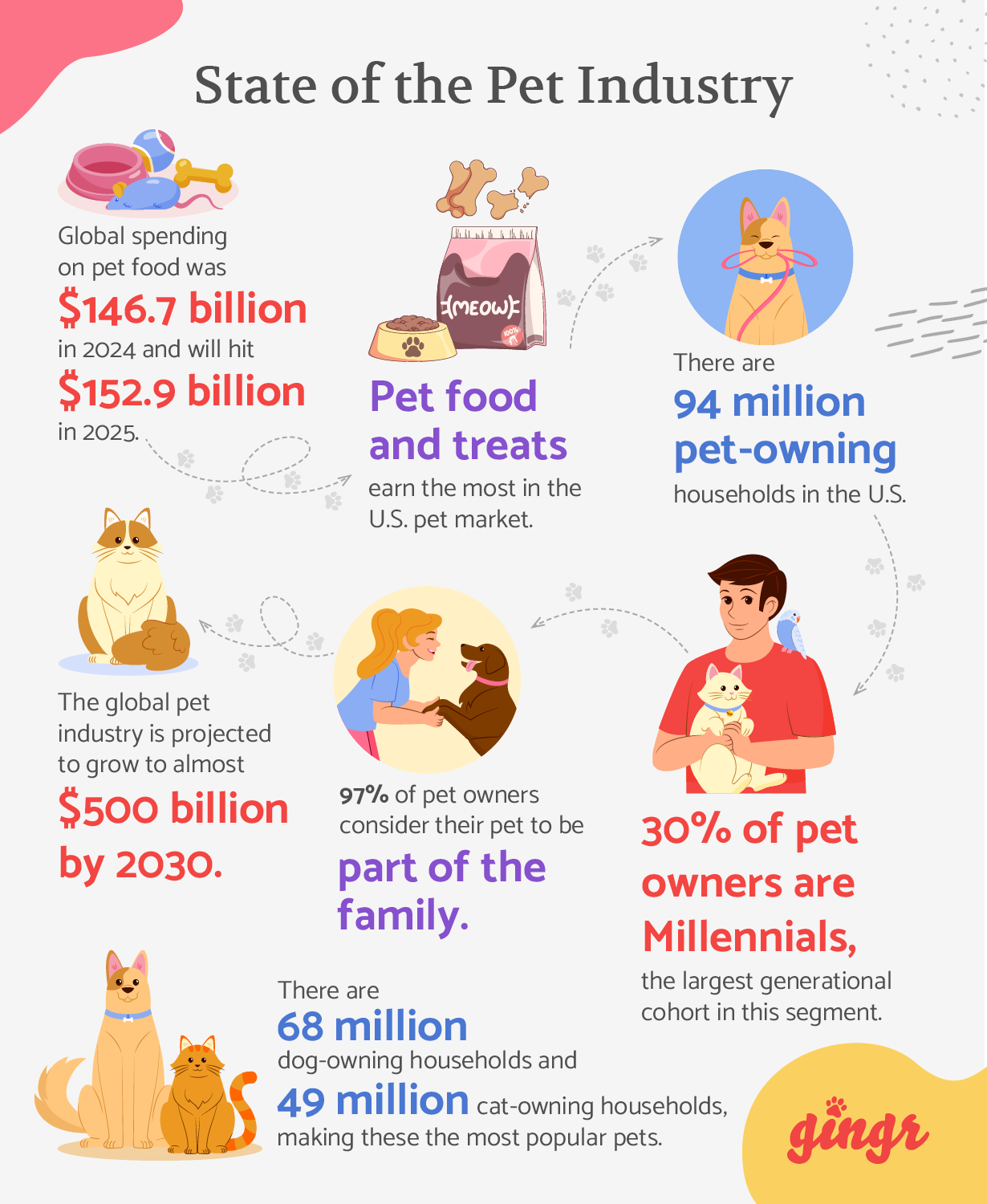
- Overall spending in the global pet food market amounted to $146.7 billion in 2024 and is projected to reach $152.9 billion by the end of 2025.
- In the U.S., pet food and treats earn the highest share of consumer spending in this market, followed by vet care.
- 94 million American households own at least one pet.
- There are 68 million dog-owning households and 49 million cat-owning households, making dogs and cats the most popular pets.
- 30% of pet owners are Millennials, making them the largest generational cohort in this segment and demonstrating slow generational shifts in pet ownership.
- 97% of pet owners consider their furry friends to be part of their family.
- The global pet industry is projected to grow to nearly $500 billion by 2030.
These trends demonstrate a growing demand for pet-care products, increased pet ownership in general, and gradual shifts in pet industry consumer demographics. Additionally, pet parents increasingly view their pets as members of the family, showing an increase in the humanization of pets.
8 Pet Care Industry Trends to Pay Attention To
Now that you understand the general state of the pet industry, let’s cover some of the trending topics, values, and products in the space.
1. Sustainable and Eco-Friendly Products
Since environmental awareness has grown, pet owners are increasingly seeking sustainable, eco-friendly products, including:
- Biodegradable toys
- Organic food options
- Eco-friendly grooming products
- Products made from recycled materials, like paper cat litter
Additionally, consumers are looking at labels for popular certifications that show companies are dedicated to sustainability, ethics, and protecting the environment. These might include the Upcycled Food Certification, USDA Certified Organic, or Marine Stewardship Council certified, among others.
Example of This Trend
Only Natural Pet offers high-quality food, treats, supplements, flea and tick treatments, and supplies for cats and dogs. The brand is an expert in natural and sustainable food and pet products.
In addition to making pledges regarding honesty and sustainability to its consumers, Only Natural Pet is B Corp Certified. To achieve this certification, businesses must meet the highest standards for their social and environmental practices related to areas like business governance, employees, and the environment. Only Natural Pet releases public reports and their social and environmental performance to maintain its status.
2. Pet Health and Wellness
There is a growing focus on pet health, including preventive care. Expect more demand for:
- Supplements like probiotics
- Specialized diets, such as fresh or freeze-dried food
- Fitness trackers designed specifically for pets
- Previously niche products like pet toothbrushes
It’s clear that pet owners want their furry, feathered, and scaly friends to be with them as long as possible and to feel their best.
Example of This Trend
Zesty Paws is an entire brand dedicated to offering supplements to cats and dogs. The supplement line is designed to support pets’ long-term health, focusing on areas like immune support, behavior, hip and joint support, and gut health. Supplements reassure pet owners that their four-legged friends are getting all of the vitamins and nutrients they need to thrive.
3. Pet Insurance
Pet insurance is a specific type of insurance policy that covers veterinary costs and works similarly to human health insurance. Typically, pet parents will pay a monthly premium that then covers a portion of:
- Wellness visits
- Sick visits
- Chronic condition management (e.g., insulin for diabetes, physical therapy for arthritis)
- Emergency surgery
For instance, say a dog owner pays $50 a month for an accident and illness plan. When their dog requires an unexpected $4,000 surgery for a broken leg, the insurance company reimburses 80% of the cost after a small deductible is met.
For vets, this trend results in more clients complying with the best treatment options because insurance makes getting this care more affordable. This can also lead to higher patient revenue per visit—more clients can access treatments that are valuable but not strictly necessary. Additionally, other pet businesses might see higher spending from pet parents who aren’t financially strained from vet bills.
Example of This Trend
Spot Pet Insurance is a pet insurance provider that offers a variety of customizable plans for dogs and cats. Spot Pet has no upper age limit for enrollment, making it a great choice for pet parents with senior pets. It boasts up to 90% cash back on eligible vet bills and 24/7 telehealth access—plus, pet parents can visit any vet in the U.S. or Canada. It also covers everything from unexpected accidents to preventative care, making it easier for pet parents to manage the costs of both emergencies and holistic wellness trends.
4. Direct-to-Consumer (DTC) and E-commerce
Direct-to-consumer (DTC) is a unique business model in which a brand sells its products online directly to customers rather than using a big-box retailer as a middleman. This strategy falls under the umbrella of e-commerce, or the use of online platforms for selling products and services.
This trend presents both challenges and opportunities for smaller pet care businesses (i.e., those that are not huge corporations). DTC brands can present challenges for small local retailers as they often have lower prices and added convenience. These local businesses should aim to embrace what makes them unique by promoting their expertise, offering highly personalized experiences, and offering curated, local products that DTC brands can’t.
For service providers, like groomers, however, this can provide a new opportunity for additional revenue. For example, a local groomer might set up a DTC online shop to sell and deliver high-margin products to customers’ doors—think specialized shampoos, brushes, dog cologne, etc.
Example of This Trend
The Farmer’s Dog is a pet food company—with a unique twist. This brand offers vet-approved, high-quality, nutritious pet food that’s delivered right to the customer. The Farmer’s Dog also offers personalized meal plans and portion sizes based on each pet’s nutritional and caloric needs, delivering an experience that feels special and convenient.
This service allows pet parents to feel good about their pet’s overall nutrition and wellness without sacrificing the convenience factor of traditional pet food.
5. Luxury Pet-Care Items and Services
As pets are increasingly seen as family members, there is currently a rise in luxury pet services. These include:
- Luxury pet carriers
- Fancy grooming products
- High-end pet spas
- Boutique pet hotels
- Gourmet pet food services
In addition to supporting their pets’ health, parents want to ensure their animals live comfortable, enjoyable lives. They’re willing to spend on luxury services to remove stressors from their pets’ lives and treat them as they would a human family member.
Example of This Trend
Outdoor cat enclosures, or catios, make it possible for cats to get time outside without jeopardizing their safety (or the safety of local birds!). These enclosures are often highly customizable, and owners can add all kinds of bells and whistles to make the structure as comfortable and engaging as possible.
6. Customized Products
Customized products that cater to the unique needs of individual pets are becoming more popular. To pet parents, their dog, cat, lizard, bunny, or fish is one in a million, and they want products that reflect this, such as:
- Personalized pet food formulas
- Custom-fit harnesses and collars
- Personalized toys, beds, and apparel
- Customized apparel and products for pet owners
These products can also help owners integrate their pets into more areas of their lives. For example, maybe they want pet harnesses in their favorite color or foods that align with their personal beliefs and standards.
Example of This Trend
Humans can create custom pet beds for their animal companions with the service Cuddl. They can select the size, type, fabric print and color, and trim color of the bed. Plus, they can add their pet’s name for additional personalization. Owners who like to blend pet supplies with their other home décor will appreciate these types of products.
7. Technological Advancements
Technology plays a significant role in pet care, and recent advancements make it possible for owners to level up their pet care practices even when they aren’t home. Many pet technology companies incorporate AI into their tools, using machine learning to process data, automate tasks like feeding, and provide personalized insights into each pet’s health and needs.
Consider recent advancements in:
- Pet tracking devices like collar tags and cameras
- Automated feeders
- Automatic litter boxes
- Interactive toys that can be controlled via smartphones
These products can also take the burden of certain unpleasant tasks off pet owners’ shoulders. This improves the overall pet-owning experience while ensuring important jobs still get done.
Example of This Trend
PetPace offers an AI-powered health monitoring collar that includes around-the-clock telehealth and telemedicine access as well as GPS tracking. For instance, users can chat about their pet’s data with real vets in the PetPace app or share the data with their local vet at their next appointment. The collar tracks everything from your pet’s temperature to their stress level to cultivate information about activity, wellness, and sleep scores.
8. Humanization of Pets
The sentiment of treating pets like family members influences a variety of product and service offerings in the pet industry, from fashion to furniture designed specifically for pets. These trends showcase the dynamic nature of the pet industry and the ongoing commitment to enhancing the lives of pets and their owners.
There is still plenty of room for creativity and innovation in this category. Your business could have the next product or service that appeals to pet parents, so start brainstorming. Or, maybe you simply work this trend into your marketing strategy and brand message.
Example of This Trend
You may have heard of pet influencers, or petfluencers, before. These are famous pets that owners showcase online to promote products and services they love. Typically, their viewers enjoy pet influencers for their quirky personalities and come to trust their opinions on pet products—and it doesn’t hurt that the subjects are adorable!
Check out a couple of the most popular petfluencers, Doug the Pug and Nala Cat:
Wrapping Up
These trends all tie back to one overarching theme: people see their pets as an integral part of their lives that is fundamental to their happiness. This means they want the products and services that will keep their pets as happy and healthy as possible, for as long as possible—and they’re willing to pay top dollar for them.
This year, keep these trends in mind when serving your pet care business’s clients. Take advantage of pet business software like Gingr to deliver top-of-the-line, personalized services without sacrificing efficiency or your bottom line. These additional resources from our blog can also help you incorporate industry trends into your business:
-
Learn Industry Secrets With This Dog Marketing Playbook. These trends don’t just apply to your company’s products and services. Browse our guide to dog marketing to see how to level up your communications, too.
-
Powerful, Comprehensive Pet Scheduling Software by Gingr. Are you a pet business owner looking to take advantage of the increased demand for luxury pet care services? See how pet scheduling software can help.
-
12 Must-Try Dog Daycare Ideas for Happy, Healthy Pups. Explore fresh ideas for your dog daycare that align with top pet industry trends.

Subscribe to the Gingr Blog